There are many reasons why you might be sitting in front of your screen, looking for information on how to learn Danish. Maybe you are an international in Denmark who wants to dive into the community and culture of the country. Maybe you just want to stop telling the cashier “likewise” when they ask if you want the receipt. Or possibly you’ve just made the decision to learn Danish for fun – because why not?
No matter what your motivation is, I’m sure you’ll agree that learning Danish can feel overwhelming at first. Where do you start? How do you practice? How difficult is it really? And how in the world can someone pronounce words so differently from what they look like on paper?
As a foreigner who started out learning Danish in my home country and then moved to Denmark to study, I’m all too familiar with how challenging it can seem to learn the language. Now, I’m even happier to share with you these 10 tips on how to learn Danish that have made it so much easier for me to get my dansk on!
1. Watch videos, movies, and series in Danish

This will help you learn expressions used in all kinds of different situations that may be funny, dramatic, intense… – in other words, easy to remember.
Especially when you are starting out, it’s a great idea to enable subtitles whenever possible. This way, you’ll be able to see how words are spelled and how they are pronounced at the same time.
Here’s a tip if you stumble upon a funny, interesting, or difficult expression: repeat it out loud, look up its meaning, and proudly call it a new part of your vocabulary!
2. Read in Danish
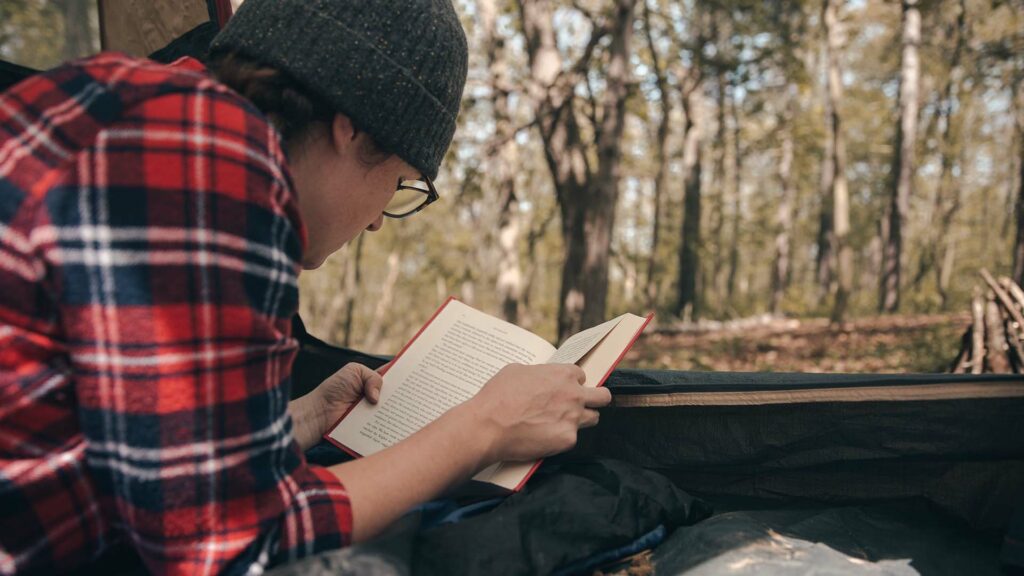
Another way to build your Danish skills is to read, read, and read some more. Children’s books are a great way to start because they contain simple sentences and pictures. This makes it easier to remember new words you might bump into.
The news is also a helpful candidate since it’s usually written using straight-forward sentences and lined with images. As a bonus, you will always be up to date on current events in and outside of Denmark.
3. Take Danish lessons

Learning any language by yourself can be a tough nut to crack – because how do you know where to start and how to continue?
That’s why it is immensely helpful to know an expert who can guide you through the process, answer your questions, and give you the right exercises to put your skills to use. Attending language courses gives you access to all those things – and you get to attend them with a bunch of people that are in the same boat as you!
Are you too busy to go to Danish classes? Not living close to a language school? Or just not into traditional language class settings? You’ll be happy to hear that nowadays, this doesn’t keep you from being able to enjoy language lessons anymore. At Swap Language, you can learn Danish online in a flexible, relaxed, and fun way: participate actively in live lessons or watch video classes any time of the day, at your own pace.
4. Talk to yourself in Danish

If you ask me what the hardest part about learning Danish is, the word pronunciation inevitably pops up in my mind.
While there is no need to pronounce everything perfectly, there are some things you can do to practice both getting all those strange sounds right and getting your voice (it’s a full face workout though, let’s be honest) used to speaking the language. This will help you in becoming more fluent because you won’t need to think about how to produce a certain sound on top of everything else you have to consider.
So, how do you go about this?
This might feel weird at first and will get your roommates, family, or neighbors to question your mental well-being. But the simple answer is: talk to yourself!
Introduce yourself in the mirror, tell a story, or read to yourself. Try to sound as Danish as possible. Tackle the weird sounds and say “rødgrød med fløde”, “uddannelse”, and other words with pesky sounds over and over again – and feel them roll off your tongue more easily in everyday situations.
5. Talk to Danes

When trying to speak Danish as a non-native speaker, you may have noticed a tendency: As soons as it becomes obvious that you’re struggling to understand or say something in Danish, your conversation partner will switch to English. This can make communication easier and help avoid misunderstandings – but it sure doesn’t help if you’re trying to improve your Danish skills!
Here, the motto is: don’t give up. A lot of the time, your coworkers, roomies, and friends will be happy to hear that you’re learning Danish, and will patiently engage in a conversation with you! Even better, they can give you feedback on how you’re k doing, and help you find words you can’t think of yourself.
6. Find exercises and textbooks

This is a simple, but useful one: Take a trip to your local library or bookstore and see if you can get your hands on a Danish learning textbook or some exercises. For extra language learner points, you can practice your talking skills by asking the librarian or shop assistant where those books are. In Danish, of course.
There are also a bunch of apps that can help you learn Danish with simple exercises, so you can practice your language skills on the go.
7. Find a language exchange partner

Another way to get talking is to find someone who speaks the language you are trying to learn and is trying to get better at speaking your native language. This means that both of you benefit: you get to speak Danish some of the time, and the other person gets to speak your language with you. Depending on your schedules, locations, and preferences, you can meet over video call or in real life over a cup of coffee.
Facebook groups can be very helpful here – find your local language exchange group and see who is looking for the same language pairing as you!
8. Listen to the radio, podcasts and audiobooks

A great hack for busy bees is to listen to audio in Danish – whether that just means turning on the radio, finding a podcast about an interesting topic, or a suspenseful audiobook. You can do all these things while you travel, cook, do the dishes, knit, or fall asleep.
The goal is not to understand every single word – but the more Danish you hear, the more familiar you get with it, and the better you get at understanding.
How about starting off with a podcast about all things language?
9. Listen and sing along to Danish music

This one might also feel a little awkward at first. But: using music can help you learn languages more efficiently.
Take a look around and ask your friends for good songs with Danish lyrics. And for the ultimate experience, learn to sing (or rap) along with it!
It’s almost impossible not to have fun doing this, no matter how good or horrible you are at singing. Additionally, whenever you bump into a new word, you can learn how to pronounce it and look up what it means. And boom, another one for the vocab!
10. Sprinkle your everyday life with Danish
Finally, there are a whole lot of small changes you can make in your everyday life. Set your phone language to Danish, make a Danish to-do list, cook using Danish recipes, and write your grocery list in Danish… I’m sure you can think of many more! To help you get started with your grocery list, Swap Language has got you covered: learn about groceries and how to ask your way around a shop by watching this lesson!
Congratulations – now you know how to learn Danish!

… or at least have a good handful of inspiration! Now that you’ve got all these tips floating around your head, let’s make sure you don’t forget the essentials when it comes to how to learn Danish:
- Expose yourself to the language as much as you can. This can be done by reading, watching, and listening to Danish media – this is especially useful if you decide to learn Danish before you come to Denmark or just for fun!
- Get talking! No-one telling you how to learn Danish will let you get away without this one. Repeat what you hear when you’re alone, and put yourself out there – socialize with Danes, go to events, chat with your neighbor…
- Make use of Danish lessons – over at Swap Language, you can follow lessons for every level, situation, and schedule!
- Finally, don’t forget to have fun with it! Nothing needs to be perfect, and everyone learns differently. There is no single guide on how to learn Danish the right way. But a great way to get started is to try out these tips and see which ones work the best for you!


